
Tech Digest – January 16, 2026
EU POLICY & REGULATION
EU bans businesses from refusing cash payments
EU ministers decided in December to ban businesses from refusing cash, reversing years of policy that pushed digital payments. The decision comes as 12% of European businesses refused cash in 2024 (up from 4% three years earlier) and cash usage dropped from 79% of in-person transactions in 2016 to 52% in 2024.
Note: This signals a regulatory shift toward protecting citizens who struggle with digital systems — particularly elderly and lower-income populations. Public institutions should ensure their service delivery models don’t inadvertently exclude cash-dependent citizens, and procurement of payment systems should account for mandatory cash acceptance requirements.
Sources: The Economist
AI GOVERNANCE & WORKFORCE
McKinsey tests AI collaboration skills in graduate hiring
McKinsey is piloting an AI interview for some graduate candidates, requiring them to collaborate with its internal AI tool “Lilli” during final-round assessments. Interviewers evaluate how applicants prompt the system, assess outputs, and apply conclusions to client scenarios. CEO Bob Sternfels noted the firm now operates 20,000 AI agents alongside 40,000 staff.
Note: This signals a shift where AI fluency becomes a baseline hiring expectation in professional services. Public institutions should consider how AI collaboration skills factor into workforce planning and staff development — particularly for roles involving research, analysis, and citizen service delivery.
Sources: Financial Times | Fortune
AI TOOLS & DEVELOPMENT
OpenAI releases GPT-5.2 Codex for long-running agentic tasks
GPT-5.2 Codex is now available via API and integrated into development tools including Cursor. Cursor’s CEO reported building a complete browser from scratch using the model, which ran uninterrupted for one week and generated 3 million lines of code. The model is optimized for sustained autonomous coding tasks.
Note: The shift from “AI assistant” to “AI agent that works autonomously for days” has implications for software procurement and development partnerships. Institutions planning digital projects should understand that vendor capabilities are rapidly changing — what required teams of developers may soon be achievable with different resource models.
Sources: Neowin | Cursor Forum
Google launches “Personal Intelligence” for Gemini
Google’s Gemini assistant can now connect across Gmail, Photos, Search, and YouTube to provide personalized responses. The feature reasons across user data to surface proactive insights. It’s off by default and available initially to paid subscribers in the US.
Note: This represents a significant shift in how consumer AI assistants handle personal data. Institutions should monitor how citizens’ expectations around AI personalization evolve, and consider implications for their own citizen-facing AI implementations — particularly around data access, consent models, and privacy-by-design principles.
Sources: Google Blog | CNBC
MARKET LANDSCAPE
Microsoft approaches $500M annual spend on Anthropic
Microsoft has become one of Anthropic’s top customers, with spending approaching $500 million annually. The company uses Claude models across Microsoft 365 Copilot, GitHub Copilot, and Security Copilot. Azure salespeople are now incentivized to sell Anthropic models with quotas matching Microsoft-made software. Meanwhile, OpenAI signed a $10+ billion multi-year deal with Cerebras for 750 MW of compute capacity through 2028, diversifying its infrastructure beyond traditional GPU suppliers.
Note: The AI market is consolidating around multi-model strategies rather than single-vendor dependence. When planning AI procurement, institutions should consider that even major technology companies are building redundancy across AI providers — suggesting a portfolio approach may reduce long-term risk.
Sources: The Information via PYMNTS | OpenAI Blog | TechCrunch
ENERGY & CLIMATE
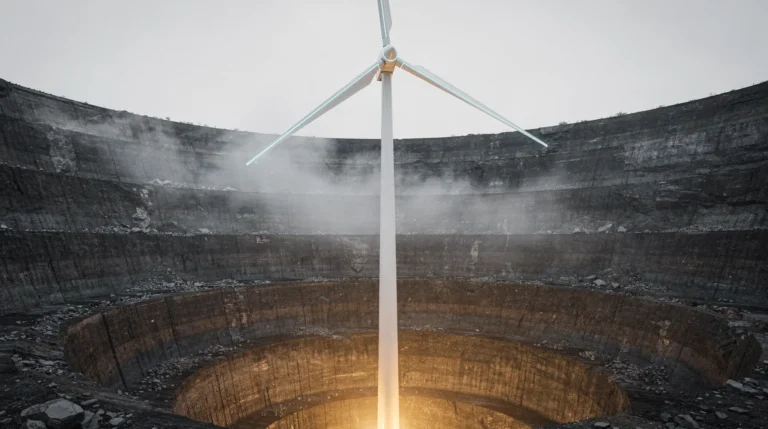
Coal power generation falls in China and India for first time since 1973
Coal-fired electricity generation fell 1.6% in China and 3% in India in 2025 — the first simultaneous decline since 1973. The drop came after both countries added record amounts of clean energy, with China installing over 300 GW of solar and 100 GW of wind power.
Note: This marks a potential inflection point for global emissions, as China and India’s power sectors drove 93% of the rise in global CO₂ emissions from 2015-2024. Institutions tracking sustainability targets or climate-related policy should note this structural shift — though experts caution clean energy growth must accelerate to lock in permanent decline.
Sources: The Guardian | Carbon Brief