
Tech Digest – April 2, 2026
The Model Frontier Compounds
Strongest Open-Weight Model Ships Under Apache 2.0 as OpenAI Confirms Next-Generation Pretrain
Arcee AI released Trinity-Large-Thinking, a 398-billion-parameter sparse mixture-of-experts model that scores 76.3% on GPQA-Diamond — the highest benchmark result for any open model outside China, surpassing MiniMax M2.7. With roughly 13 billion active parameters per token, it delivers frontier reasoning at a fraction of typical compute cost, and ships under Apache 2.0 for unrestricted commercial use. Meanwhile, OpenAI confirmed that pretraining is complete on “Spud,” the company’s next-generation base model expected to become GPT-5.5 or GPT-6. Co-founder Greg Brockman described it as “a new base” reflecting two years of accumulated research, and CEO Sam Altman indicated release within weeks. Separately, Meta published BOxCrete, an AI model for optimizing concrete mix designs — a quiet signal that frontier capabilities are now reaching construction materials science.
Note: The frontier is compounding from both directions. Open-weight models now match proprietary performance from six months ago, while the proprietary frontier prepares another jump. For institutions evaluating AI procurement — whether building on vendor APIs or deploying on their own infrastructure — the optionality is widening faster than most strategy documents can track.
Sources: Arcee AI, NewsBytesApp, Meta Engineering
Chip Sovereignty Gets Real
Chinese Chipmakers Capture 41% of Local AI Market as Intel Bets $14.2 Billion on EU Manufacturing
Chinese AI chip manufacturers have captured nearly 41% of China’s AI accelerator server market, according to IDC data reported by Reuters, eroding Nvidia’s once-dominant position despite years of US export controls. The shift reflects state-backed investment in domestic alternatives now reaching commercial scale. Moving in the opposite direction, Intel is paying $14.2 billion to buy back half of its Ireland fabrication plant from Apollo Global Management — returning full operational control of one of Europe’s most advanced semiconductor facilities and signalling confidence that European-based manufacturing can ride the AI infrastructure boom.
Note: Two data points, one fracture line. Chip supply chains are splitting along geopolitical boundaries whether policymakers planned for it or not. For EU institutions, Intel’s Ireland commitment is the more immediately relevant signal — it strengthens the case that post-Chips Act investment in European fab capacity is holding, not retreating.
Agents Become Always-On
Anthropic Tests ‘Conway’ — A Persistent Agent That Runs After You Close the Tab
Anthropic is testing Conway, a standalone agent environment that moves Claude from a chat interface into a persistent, always-on system. Discovered through a code leak and reported by TestingCatalog, Conway features a dedicated web instance, webhooks that external services can use to trigger actions, Chrome browser control, and a custom extension framework (.cnw.zip) for third-party tools, UI components, and context handlers. The architecture suggests an agent that stays active between sessions — maintaining state, responding to events, and executing tasks without human initiation.
Note: The shift from “agent you invoke” to “agent that’s always running” changes the governance question. It’s no longer about approving individual AI tasks — it’s about defining what a persistent digital worker is allowed to do on your behalf when no one is watching.
Sources: TestingCatalog, Dataconomy
AI Reshapes the Workforce — Both Ways
IKEA’s AI Agent Failed 43% of the Time — So IKEA Built a €1.3 Billion Business From the Failures
IKEA deployed an AI customer service agent called Billy that resolved 57% of inquiries without human intervention. The remaining 43% — the failures — overwhelmingly involved customers requesting interior design advice, a service IKEA didn’t offer at scale. Rather than fine-tuning Billy or cutting staff, IKEA launched a paid design consultancy, retrained 8,500 call centre workers as remote interior design advisers equipped with AI-assisted tools, and generated €1.3 billion in new revenue in its first year. In the same week, Oracle confirmed global AI-driven restructuring reaching 30,000 employees — including 10,000 in India, roughly 20% of its Indian workforce. And the CEO of America’s largest public hospital system publicly stated he is prepared to replace radiologists with AI once the regulatory landscape allows it.
Note: Same technology, same quarter, opposite outcomes. IKEA treated AI’s limitations as market intelligence and retrained its workforce upward. Oracle treated AI’s capabilities as a headcount reduction instrument. The difference isn’t the technology — it’s the decision. For any institution writing an AI strategy, IKEA’s playbook is worth studying: the 43% failure rate contained more value than the 57% success rate.
Sources: Storyboard18, Fluent Support, Economic Times India, Radiology Business
The Energy Equation Tightens
Data Centres Raise Local Temperatures 2°C — and Europe Is Already Telling Citizens to Drive Less
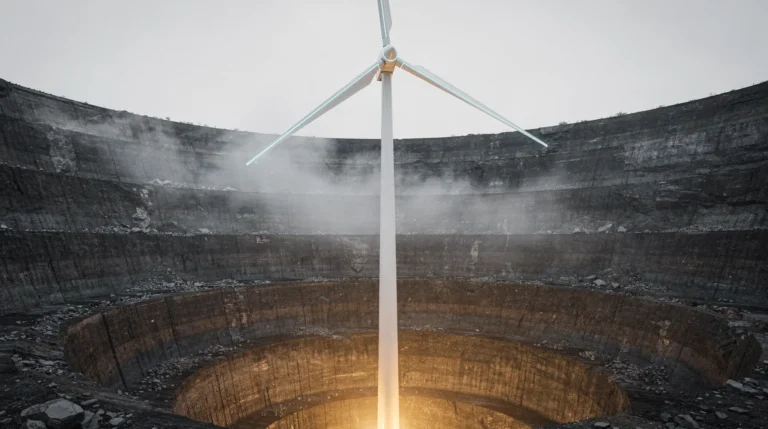
Researchers analysing two decades of satellite data found that land surface temperatures rise an average of 2°C after a data centre begins operations, with elevated temperatures extending up to 10 kilometres from the site. The study, which examined hyperscaler facilities built between 2004 and 2024, estimates that more than 340 million people globally live within these “data heat island” zones. In extreme cases, nearby temperatures increased by as much as 9°C. Separately, the European Commission urged EU citizens to work from home and drive less, citing a prolonged energy supply disruption from the ongoing Gulf conflict. The twin pressures — rising AI infrastructure demand and constrained European energy supply — are converging on the same resource.
Note: Any municipality evaluating a data centre proposal now has a published temperature impact figure and a 10-kilometre thermal radius to factor into environmental assessments. That the guidance arrived in the same week the Commission asked Europeans to cut energy consumption sharpens the trade-off: the infrastructure the economy wants and the energy budget the continent has are pulling in opposite directions.
Sources: arXiv (2603.20897), Fortune, Politico
Encryption’s Clock Gets Shorter
Preskill’s Team Shows Shor’s Algorithm Running With Just 10,000 Atomic Qubits
John Preskill and collaborators published research demonstrating that Shor’s algorithm — the quantum method that breaks current encryption — can run at cryptographically relevant scales using as few as 10,000 reconfigurable atomic qubits. The estimate is significantly lower than Google’s figure of fewer than 500,000 physical qubits published last week, though the two approaches use different qubit architectures and are not directly comparable. What they share is direction: both papers compress the estimated timeline for “Q-Day” — the point at which deployed encryption becomes vulnerable — from what was thought to be decades away toward something measurably closer.
Note: This is the third major quantum cryptography paper in three months. The pattern matters more than any single qubit count. The research community is converging on a near-term threat window, not debating a theoretical one. Any institution that began post-quantum migration planning in January is already working against a shorter timeline than the one they started with.
Sources: arXiv (2603.28627)
The models are compounding. The agents are becoming persistent. The infrastructure — from chips to concrete to encryption — is being reshaped faster than the governance frameworks designed to manage it. Today’s sharpest contrast may be the IKEA and Oracle stories: same technology, same quarter, one built a €1.3 billion business from its AI’s failures while the other cut 30,000 jobs to fund its AI’s success. The difference was never the technology.